
designer, consumer dumber
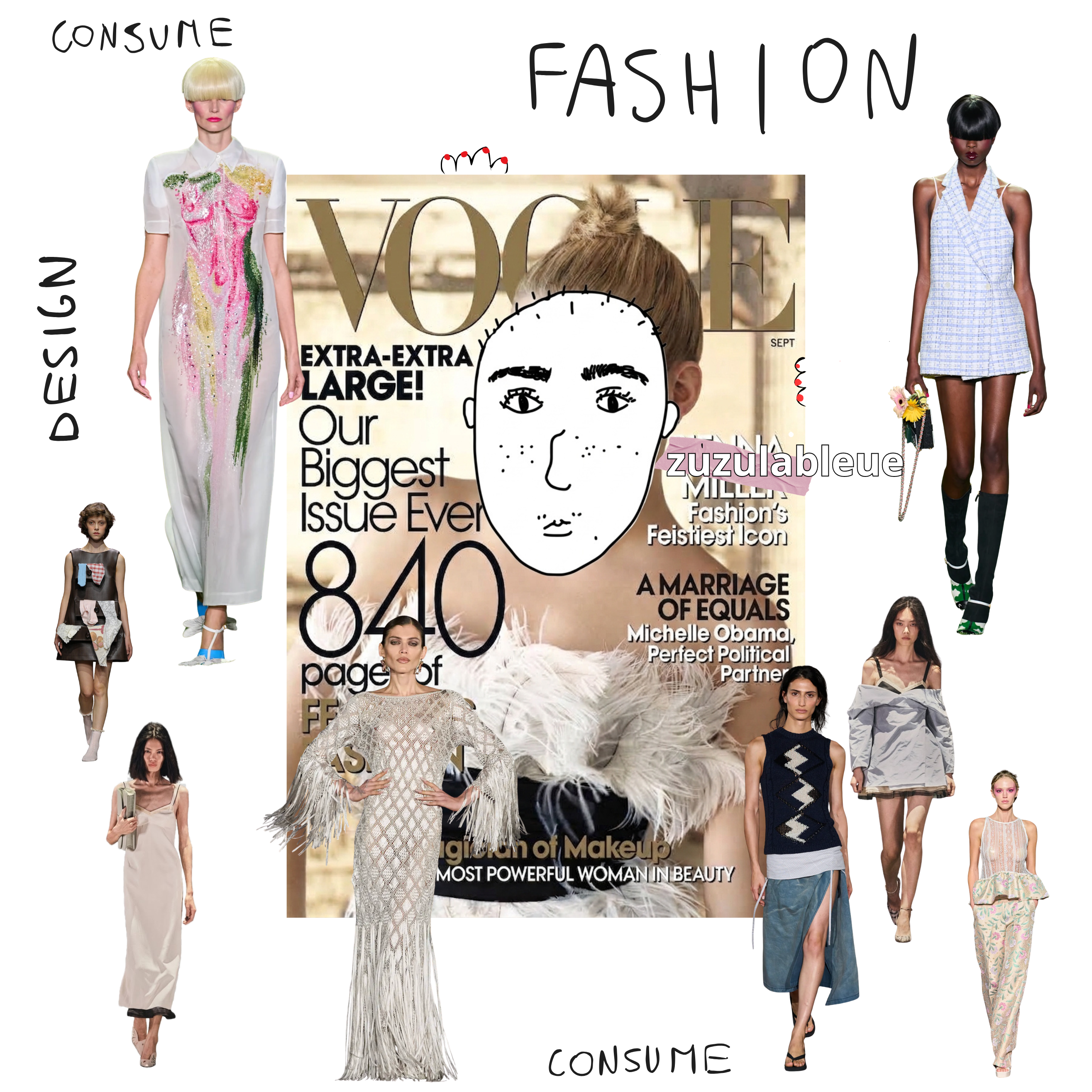
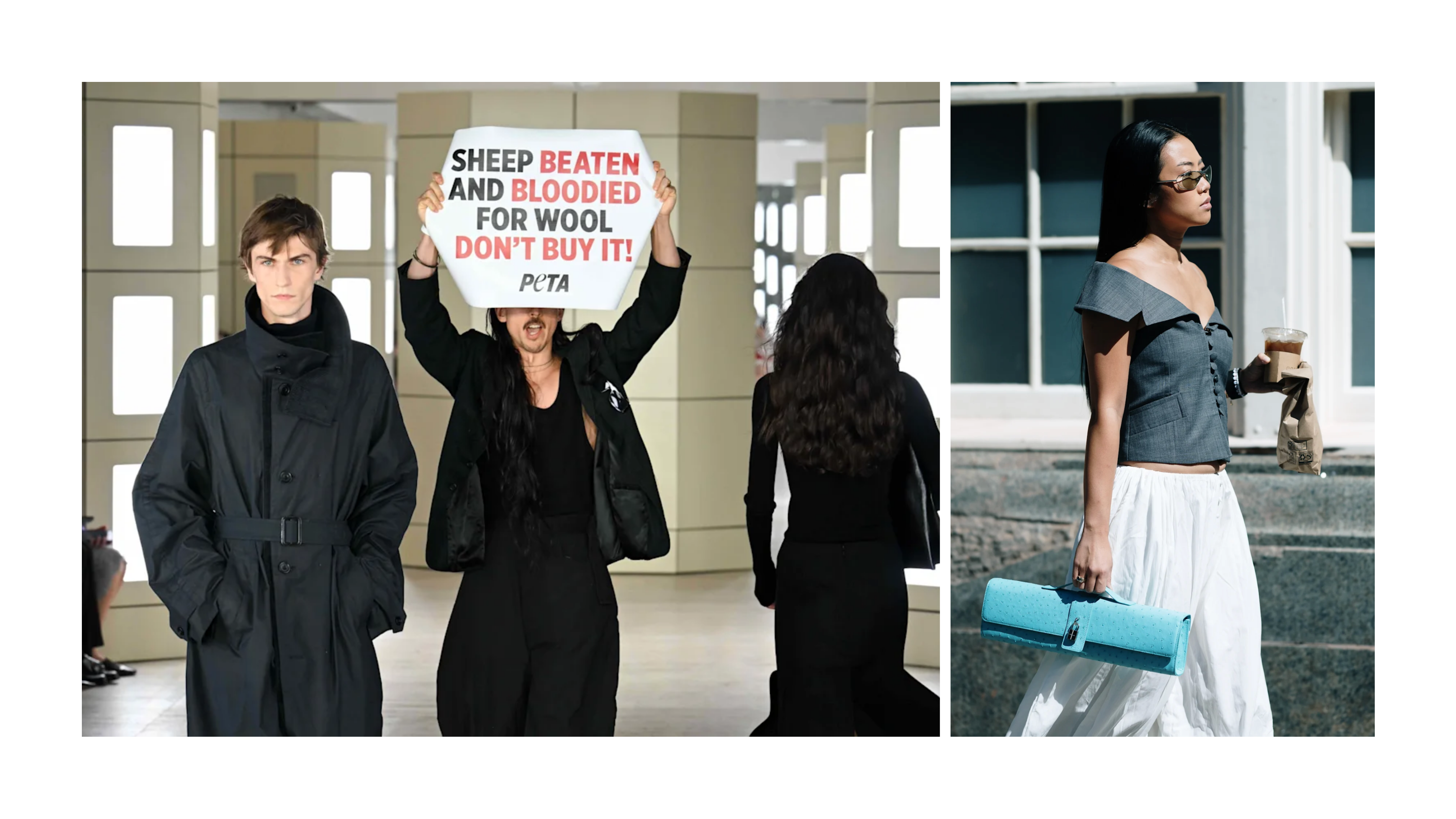
In the spirit of fashion week (and CFDA heads wrestling PETA protesters) let's talk about what exactly we're buying when we buy fashion. So here is my unhinged rant on why we’re so easily convinced that expensive equals good, and how brands are blatantly profiting from it.
For preface: I don't particularly like the word "luxury." It is very overused. I also hate using the word "chic." Like, it's just not chic to say something is chic in writing. Though, I do think it’s fine in a conversation, and it’s even better when you simply think it.
Anyways, the point is: knowing fashion is kind of (actually, it IS) cultural capital.
Veblen Economics 101
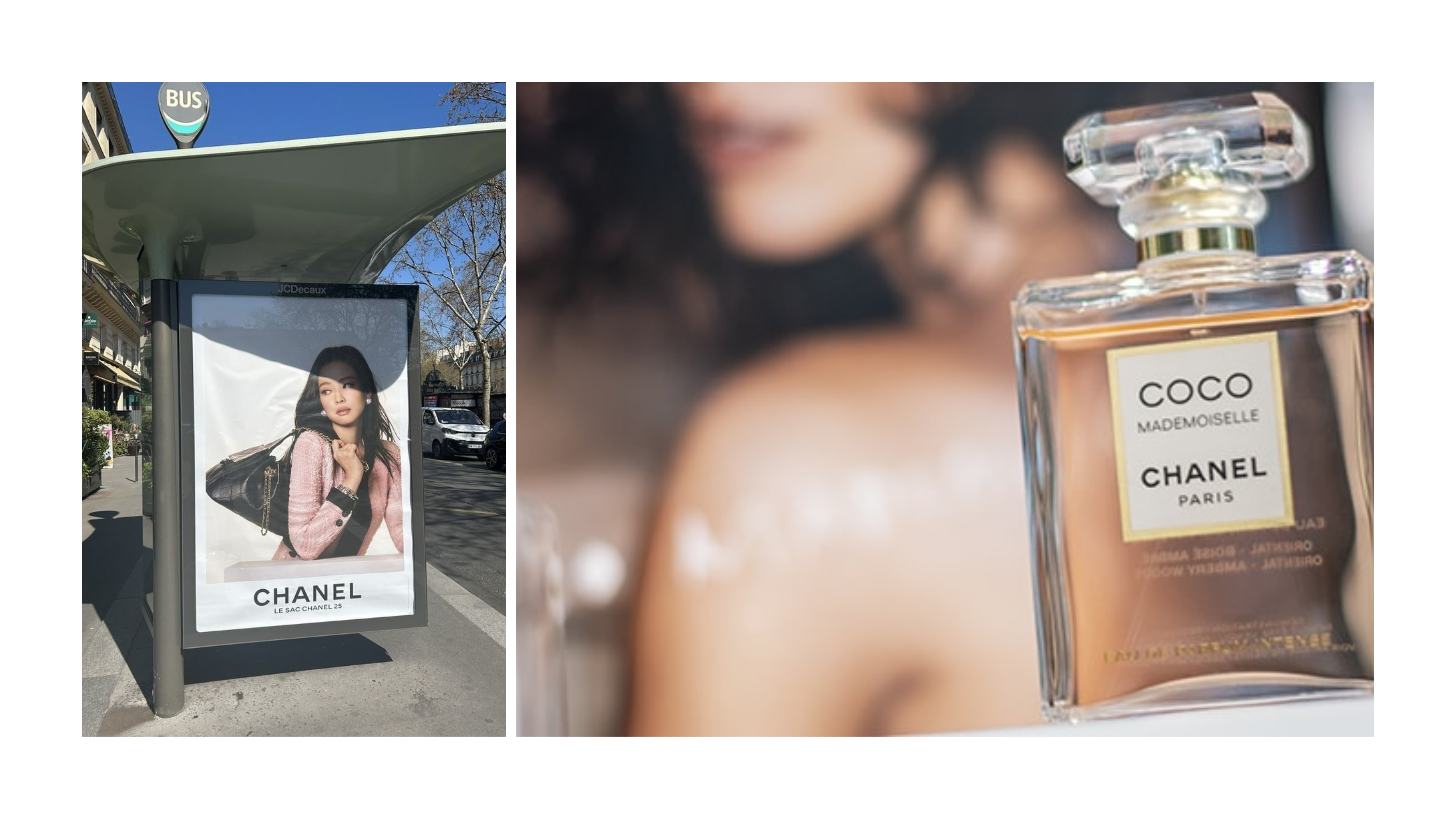
Let's start with some interesting context about aspirational marketing. Chanel, Dior, Rolex, all of these brands put up huge billboards at random bus stations in front of people who have absolutely no intention/budget to buy the product being advertised.
But… public recognition creates status. So when everyone knows that a logo costs an obscene amount of money, the logo becomes a dream. Fortunately for capitalism, it wins. Enter the $120 eau de parfum, the ultimate "accessible luxury" gateway. You might NOT walk out with a Chanel flap bag, but you still can grab a small tangible piece of the illusion at an airport duty-free!
Moving on to the ridiculous economics of Veblen goods. A Veblen good is a product for which demand can increase as its price increases because the price itself contributes to the item's desirability. Example: if the price of milk goes up, I am not going to think, wow, what an exciting status symbol, let me buy three. But if the price of a Chanel flap bag doubles, everyone knows it's even MORE exclusive, so the price becomes part of the product (hope I'm making sense).
Looking back on my wonderful 6 to 9 PM evenings in PSY100, this is actually a prime example of a price-quality heuristic: the brain shortcut that something expensive must be better (quite convenient for the people selling expensive things, huh?). But as we will get into, expensive very often does NOT equal exceptional.
Fabriqué Where?
First, the label.
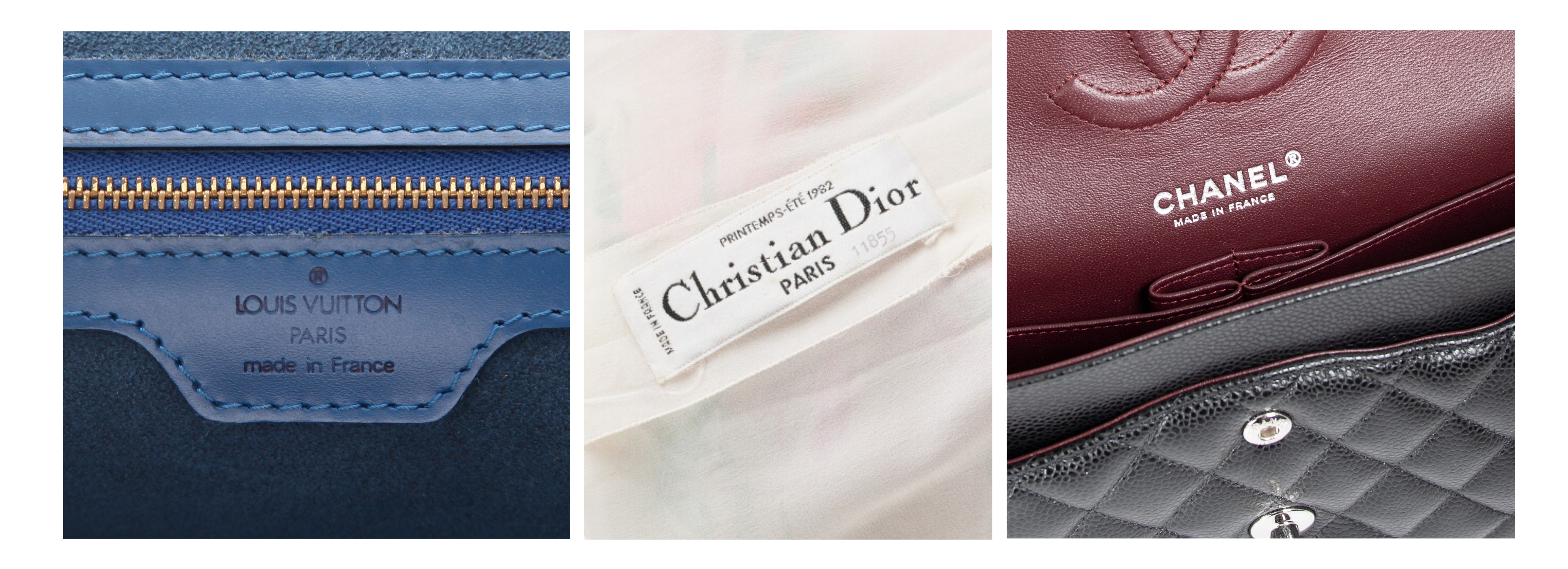
"Made in Italy." "Made in France." Italy. France. Paris. Florence. The atelier. The little French flag…
There is a loophole-ish EU rule called the "last substantial transformation" that brands love.
I know it’s much more complicated than "finish it in France and slap on the label." But to simplify things (and get you to visualize the whole ordeal) some brands manufacture almost an entire product in low-wage countries, then add the final part (like a zipper or a button) in Europe. This is how you get a designer bag, possibly produced in China, but with a FABRIQUÉ EN FRANCE label!
Now, now. If you're paying for geography, might as well pay for exclusivity (cough, cough... supply control) too.
Lots of fashion brands have famously destroyed their unsold stock instead of discounting it/selling off excess. Burberry made headlines back in 2018 when it announced it was ending the practice of destroying unsaleable products (honestly, wouldn't be surprised if other major fashion houses are still doing something similar today). I mean, you have to make the product desirable. If everyone has it, you've got problems.
These brands did start to use AI, though, to make production volumes more exact. Interesting uses of AI, no? From building ballistic weapons to world cup football analytics to reducing the number of unsold Burberry trenches that would otherwise get torched. Versatile, to say the least.
The Death of Personal Taste
In terms of the boutiques/actual retail spaces…
I love curation. I love a buyer who actually has taste. Fashion buyers at major multi-brand retailers have, in many ways, a curatorial role, and I find that extremely impressive. Dover Street Market, Neiman Marcus, Bergdorf Goodman, whatever the particular store, isn't it interesting when someone who's looked at thousands of things, gone through thousands of line sheets, and decided that THESE are the things worth putting in front of you?
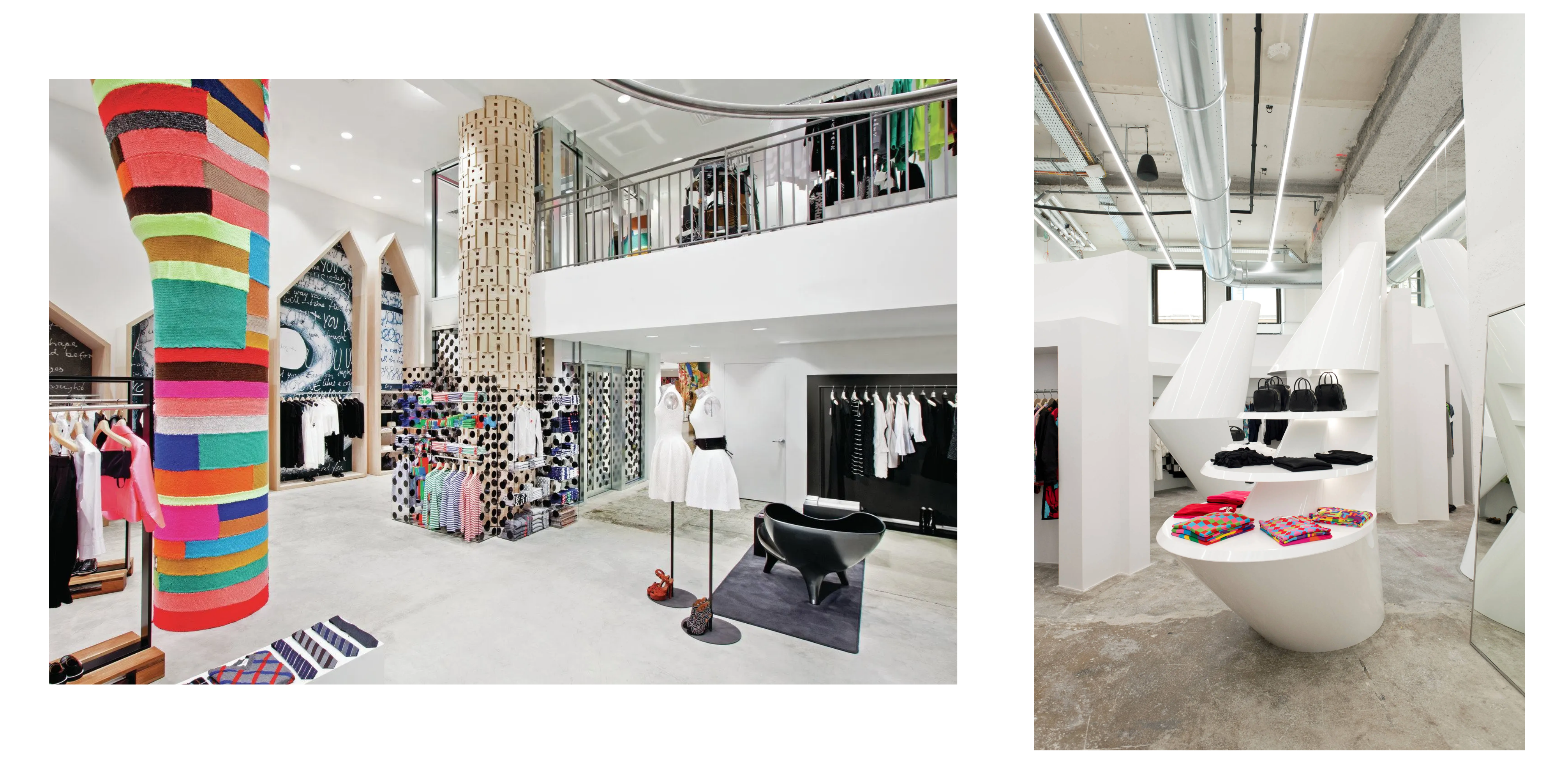
Unfortunately, today almost every luxury store carries its own copied version of the designer bag next door (think the Bottega intrecciato). Everything looks the same because every company/brand is responding to the same collected data! The algorithm feeds our need to hyper-share or show off and interestingly it turns out that most people actually LIKE being marketed to. People like being told what to wear and how to wear because the internet ruined the difference between your own taste and collectively assigned taste.
So yes, fashion today (at least the version of fashion that is presented to most of us) is overwhelmingly mass-produced. There’s always going to be another version later. A better version. A cheaper version. A version with a slightly different pocket. A version that becomes the new "it" bag simply because the old one got overexposed and turned cringe.
Les Fashions Débarquent à Paris
We like to imagine fashion week as this cool fun event where the world's illustrious celebrities and most important creative people gather in black clothing and sit front row to criticize garments. Which, to be fair, does happen. But fashion is also a business, and the shows ultimately have to sell fashion too, especially to the clients and VICs who spend enormous amounts of money. There are estimated to be around 4,000 active haute couture clients worldwide (side note: haute couture ≠ ready-to-wear), while British Vogue has cited estimates that the top 2% of luxury customers can account for around 40% of luxury sales globally. I'm just gonna let that PSY201 statistical level of understanding unravel in my mind like a loose thread on a fast-fashion sweater while I stare blankly into the Zoom camera…
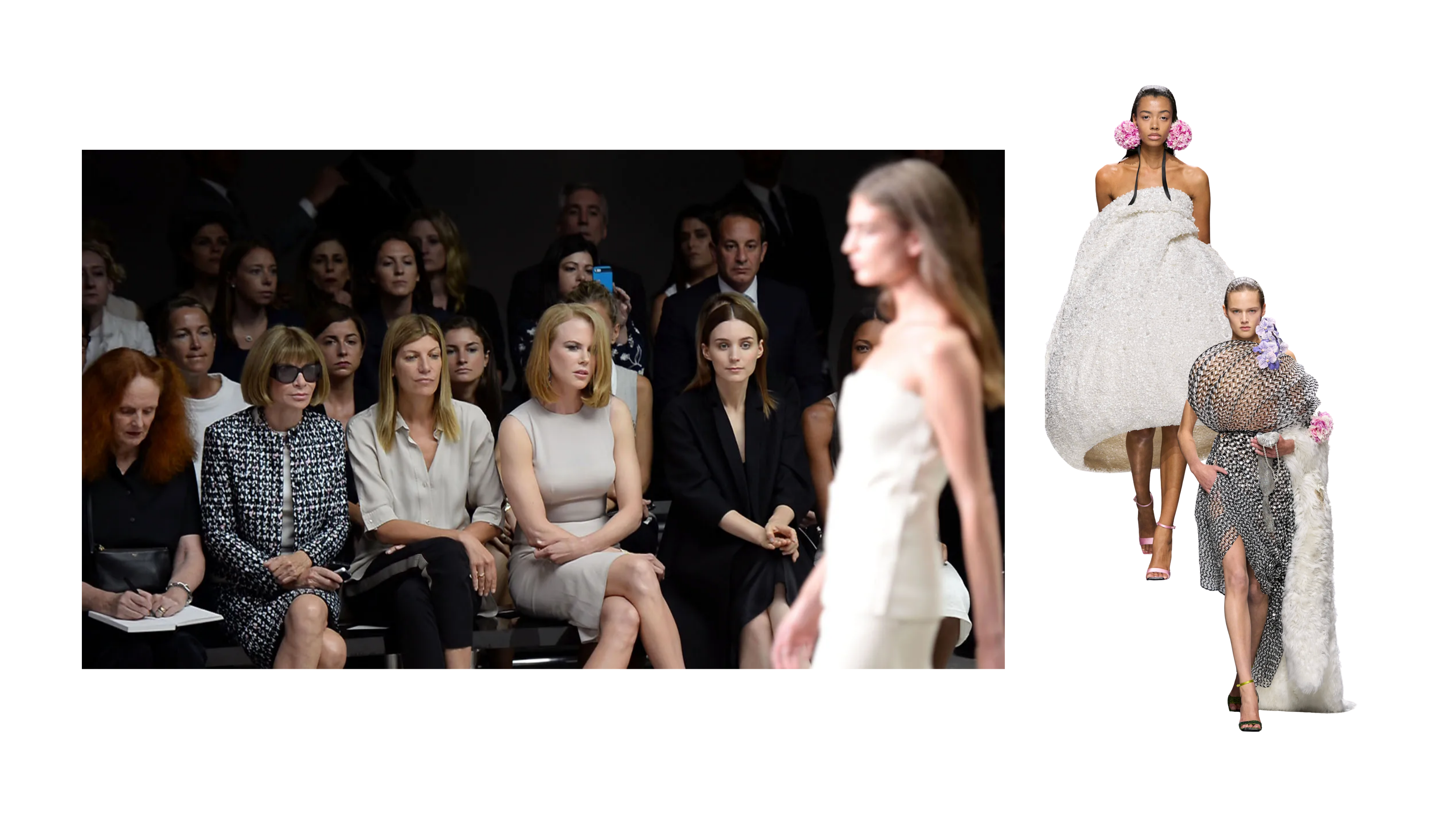
Fashion and art obviously share a clientèle. I won't get into the debate about whether fashion is art or design because frankly I have places to be and amino acid structures to learn, but money is always connected.
I am still investigating the Toronto VIC scene so I don’t feel very qualified to give you THAT full ethnographic report yet, but the Mink Mile, I personally find a bit tacky/performative. This is the supposedly high-end commercial strip of Bloor Street that people sometimes describe as Toronto's equivalent of Fifth Avenue or Rodeo Drive. There are luxury flagships (of course with security guards standing behind the glass looking like they’re protecting the Crown Jewels instead of a leather handbag) plus Holt Renfrew, Harry Rosen, and then my personal favorite, Winners, where I found an amazing Sandro blouse for about a fifth of the retail price not that long ago.
Anyway.
Go down the Reddit rabbit hole and you'll find entire communities discussing counterfeit luxury goods, factories, materials, stitching, hardware, packaging… with subreddits like r/RealRepLadies. Boy, will the internet ever cease to amaze me? You can find videos and discussions about underground factories and occasionally, the horrifying possibility that the line between authentic and fake is incredibly thin, much thinner than the marketing would like you to believe. Some brands (Moncler, Salvatore Ferragamo, Chloé) have responded with new authentication technologies, though.
Importantly, let’s remember that somewhere in the background, Arnault and Pinault are getting richer. So, as nice as the idea of romanticizing fashion sounds, it's impossible to ignore that it IS an industry. There are shareholders and conglomerates and margins and targets and expansion plans and supply chains and clients and sales figures…
Read the Tag, Please
I went to Santa Eulalia in Barcelona recently. I tried to act in the unfazed poised manner of a Gazelle de Waller, but my eyes kept widening involuntarily at the AUDACITY of the price tags.
A viscose-polyester blend Courrèges knit cardigan for €750?
EXCUZE me?
Take The Row gala pants as another example (made of 69% triacetate and 31% polyester, retailing for €1,180). The Row and Toteme are, objectively, quite boring to me, but they have found an extremely effective way to convince people that boring is the result of quality, restraint, taste, and therefore worth several hundred or several thousand dollars.
Maybe the quality is actually amazing. How would I know?
Bref, paying more attention to what is actually in the clothes is quite important if you are going to spend money on your wardrobe (I recommend a one-time Jennifer Wang doomscroll to cure the delusions).
First, inspect the stitching and make sure it's uniform and straight. Channel your inner Anna Wintour looking for an excuse to fire someone. Turn the garment inside out, gently, and look at the seams. Check for reinforcement around stress points such as pockets and buttonholes. Look at the pattern alignment, especially with something like tweed (it’s extremely obvious if the pattern doesn’t continue properly across a seam).
Button-down shirts should have a yoke.
Check the lining (it definitely should NOT look like someone gave up halfway through the inside because, apparently, nobody will see it).
Look at the buttons. Real buttons should feel cold on the cheek.
With denim, check the selvedge. Look at the inside outseam of the jean leg.
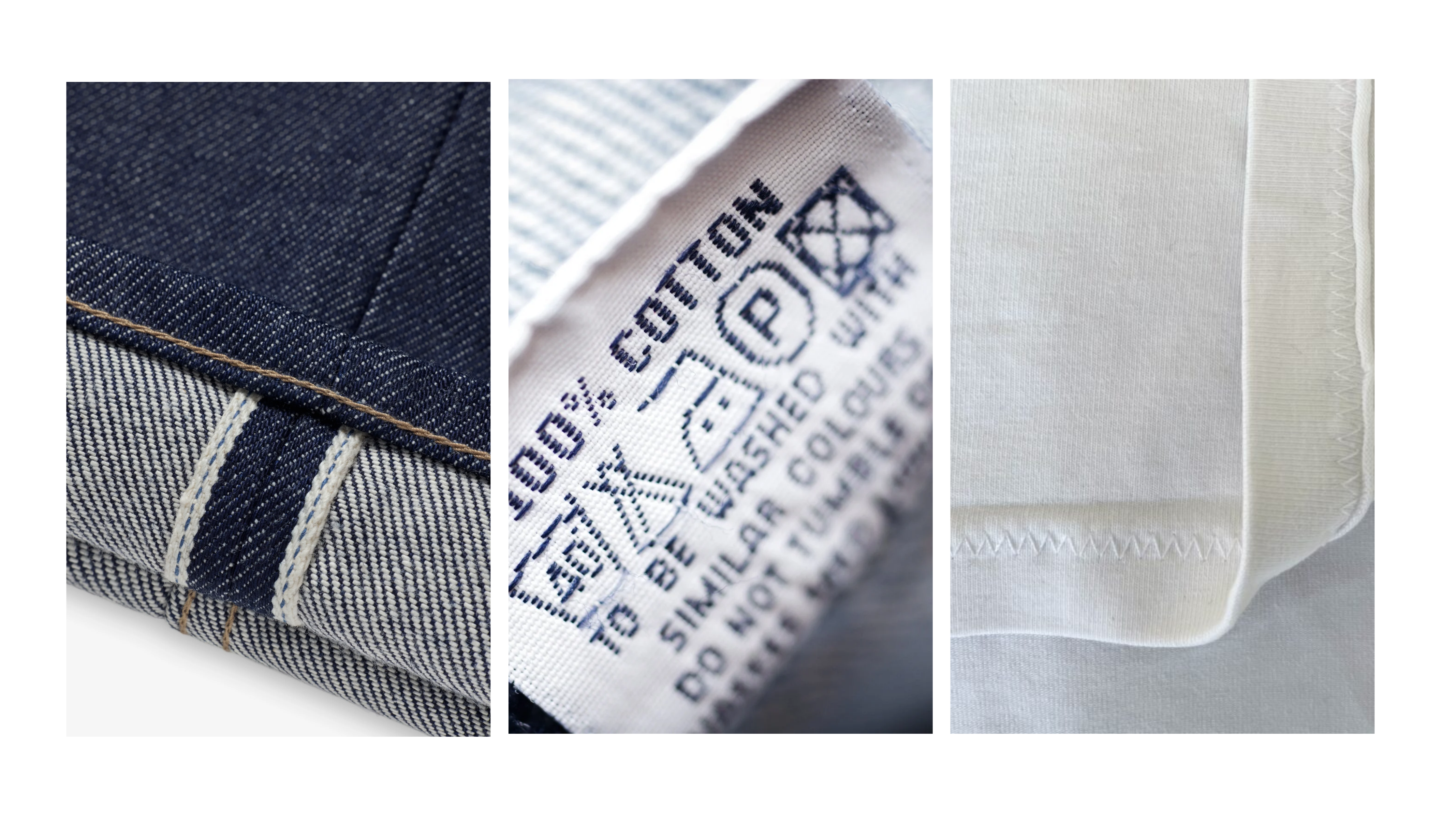
Check the draping on the hanger. Pay attention to weight. And, obviously, you need to be able to walk in the garment because, frankly, I will not care about how beautiful your trousers are if you look like you've been medically immobilized from the knees down.
Look for loose threads and pilling. Check the zippers.
In terms of fabric composition…
You've got synthetic fibers: polyester, nylon, elastane, acrylic. Polyester does not wrinkle easily. Elastane is kind of mandatory in leggings and other types of garments.
Then, semi-synthetic fibers such as viscose, modal and lyocell. These are made from cellulose-based material. Their environmental impact depends on the raw material and manufacturing process.
Best for last: natural fibers. Cotton. Silk. Wool. Hemp. Cashmere. Linen. Alpaca. Mohair (which comes from the Angora goat not the Angora rabbit). Cotton and linen together, for example, can make a very breathable summer fabric.
For leather, it’s a tad more complicated. Exotic skins such as python, caiman, ostrich, stingray and crocodile are usually sourced from animals specifically raised or harvested for their skins. But calfskin and other cattle leather are generally a byproduct of the meat industry.
Wear It Again
I personally think leather goods that develop a thick patina are beautiful. Even Miuccia Prada seems to understand the beauty of ugly, froissé, worn-in things.
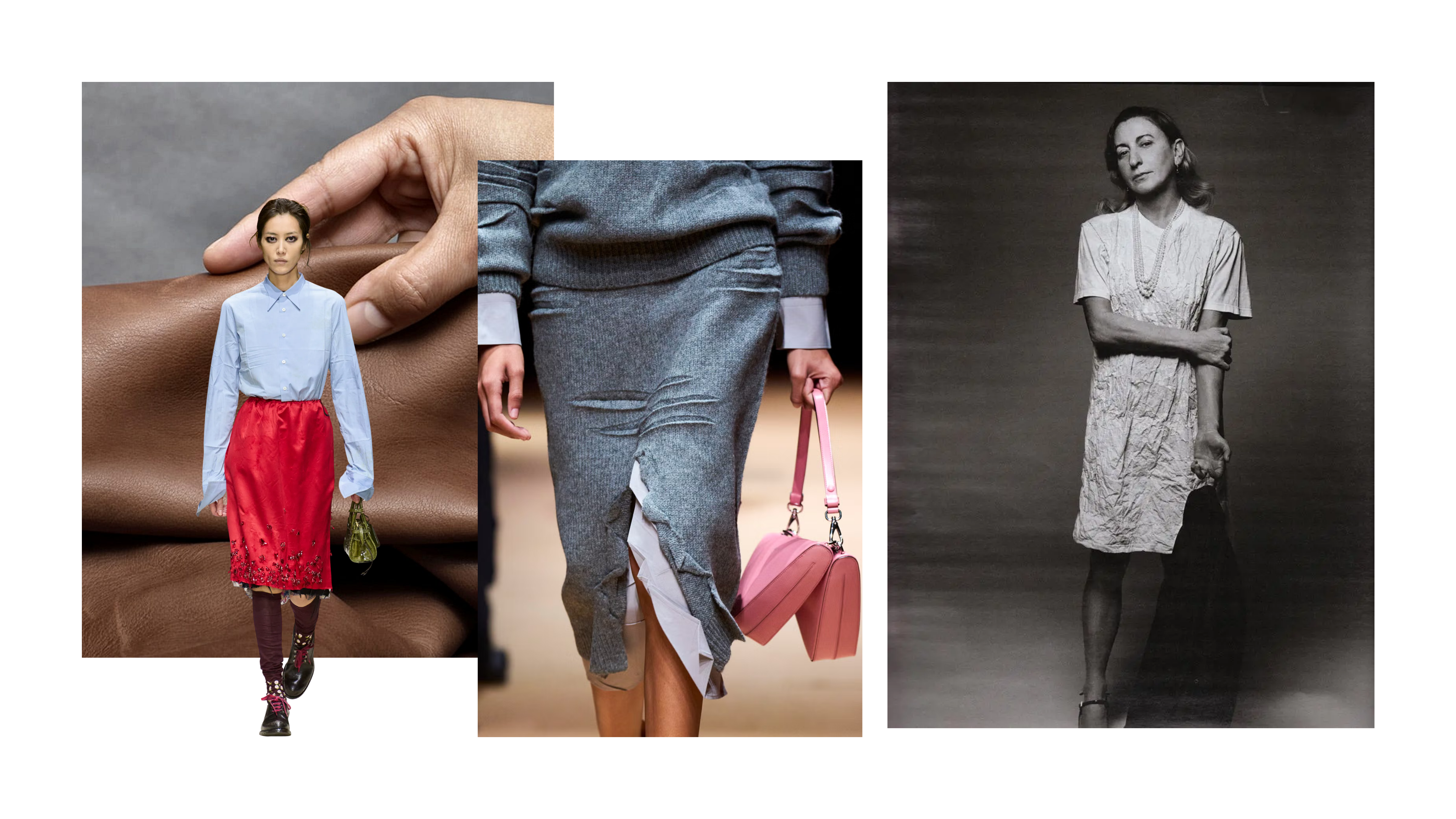
I am definitely putting words into her mouth now, but think of the actual Miu Miu girl archetype (not the influencer activation hobo bag version of it).
There is something much more interesting about a garment that looks like it has lived.
Which is also why I think everyone should repeat outfits.
Outfit repeating is normal. It's sustainable. It's creative.
Honestly, everyone should have a uniform.
Buy colors that work on you instead of whatever color happens to be trending for the next six weeks.
Research what you're wearing.
Learn why the garment is constructed the way it is.
If you're a woman, check whether your pockets are shallow. Unfortunately, most women's pockets continue to barely house a single tube of ChapStick.
The Case for Vintage
Some people literally make a living sourcing wardrobes for clients (which I also find very impressive).
Vestiaire Collective can be fantastic if you're in Europe, although in Canada I would avoid the heart-wrenching customs fees and international shipping whenever possible. The RealReal is also another story if you're outside the US.
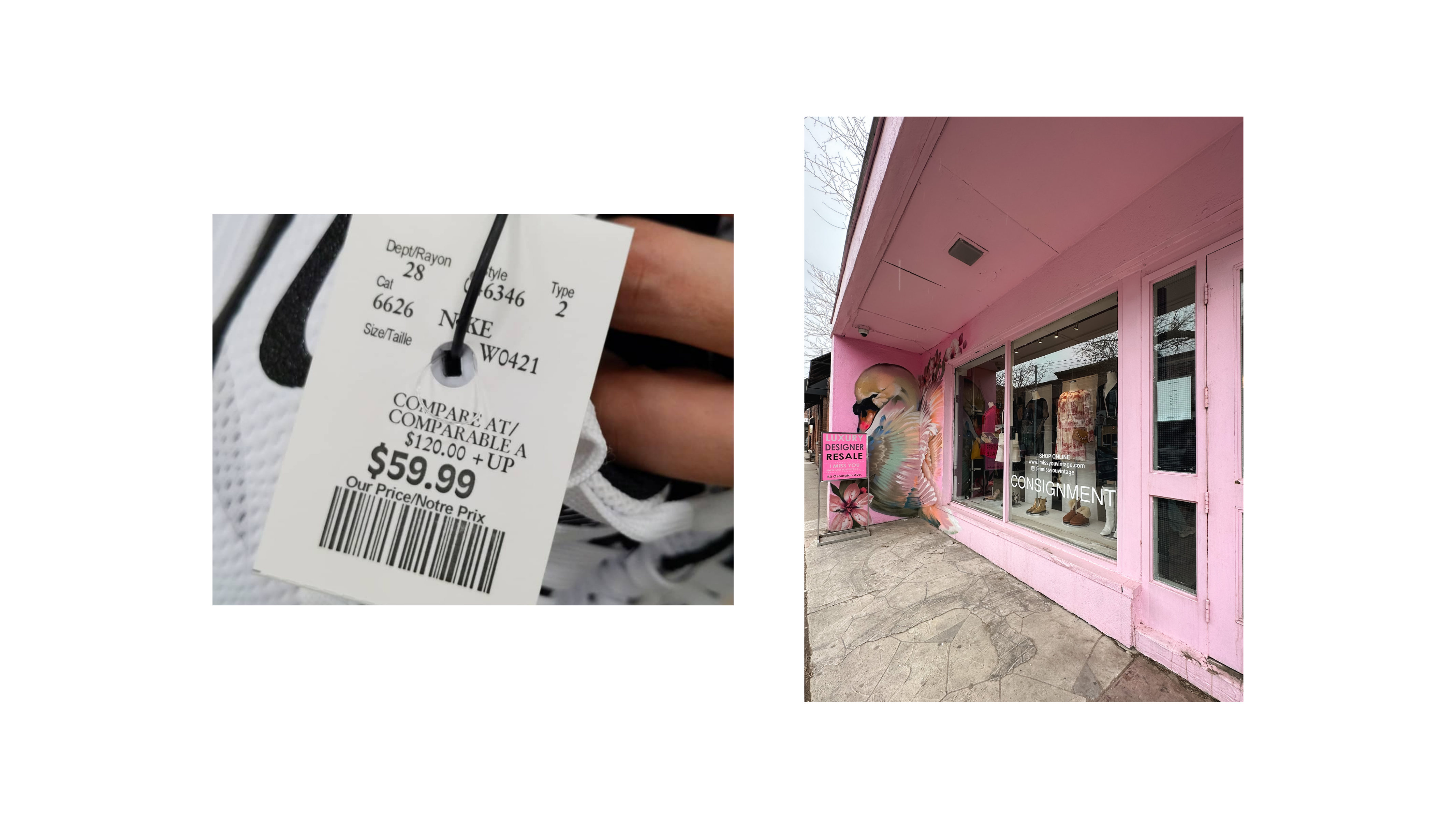
There's a whole Toronto vintage and consignment world though. But that deserves its own post.
For outlets, if you're shopping at Winners or Marshalls, look at the single digit printed right next to the little square box on the price tag. Brands like Calvin Klein, Michael Kors, Tommy Hilfiger, Steve Madden, Kate Spade make cheaper clothes specifically to sell at these stores. Code 1 means the item was cheaply made just for Winners, while Code 2 (and 7) means it's a real department store designer item left over.
Contemplations…
Which brings me to my main takeaway:
BUY ONCE, BUY RIGHT.
Le bon marché coûte cher, mais l'argent ne fait pas le bonheur.
And before anyone accuses me of turning into some total fabric snob, I'm sure half my closet is recycled polyester. I'm not pretending I’ve never bought synthetic clothes. Honestly, I only got interested in fabrics and the business side of fashion because I realized how little I actually knew about what I was buying.
You do not have to buy everything.
You do not have to own the "best" version.
You do not even have to care about designer clothing.
You just have to come to terms with the fact that very often the IDEA of owning an item is much more exciting than actually owning it.
This is why fashion is really interesting to me.
I genuinely love looking at things. It's one of the biggest joys in my life, or maybe "calming" is a better word for it. Looking at things is the best source of inspiration. Clothes, buildings, ugly handbags, beautiful chairs, the supermarket, the way someone is dressed on the TTC…
I want to be a Gonzo journalist (my sincerest apologies, this post has officially gone all over the place)
I want to look at the object, the person buying the object, the person selling the object, the person designing the object, and then follow the money up and up and up.
And then tie it all to capitalism.
We're sold the fantasy of scarcity, the fantasy of craftsmanship, the fantasy of Paris, the fantasy of Italy, the fantasy of the atelier, the fantasy of being the kind of person who owns the thing.
And that is where the designer houses get richer, the consumer gets dumber, and I apparently get a blog post out of it.
Azal